

Prolegomena Paper: Kant and Hume’s Situationship
November 6 2025
Prolegomena Paper- Kant and Hume's Situationship November 6 2025-
This is a paper I wrote in my Kant on Freedom and Knowledge class.
I'm still in this class so I will have another paper coming about Kant on Freedom.
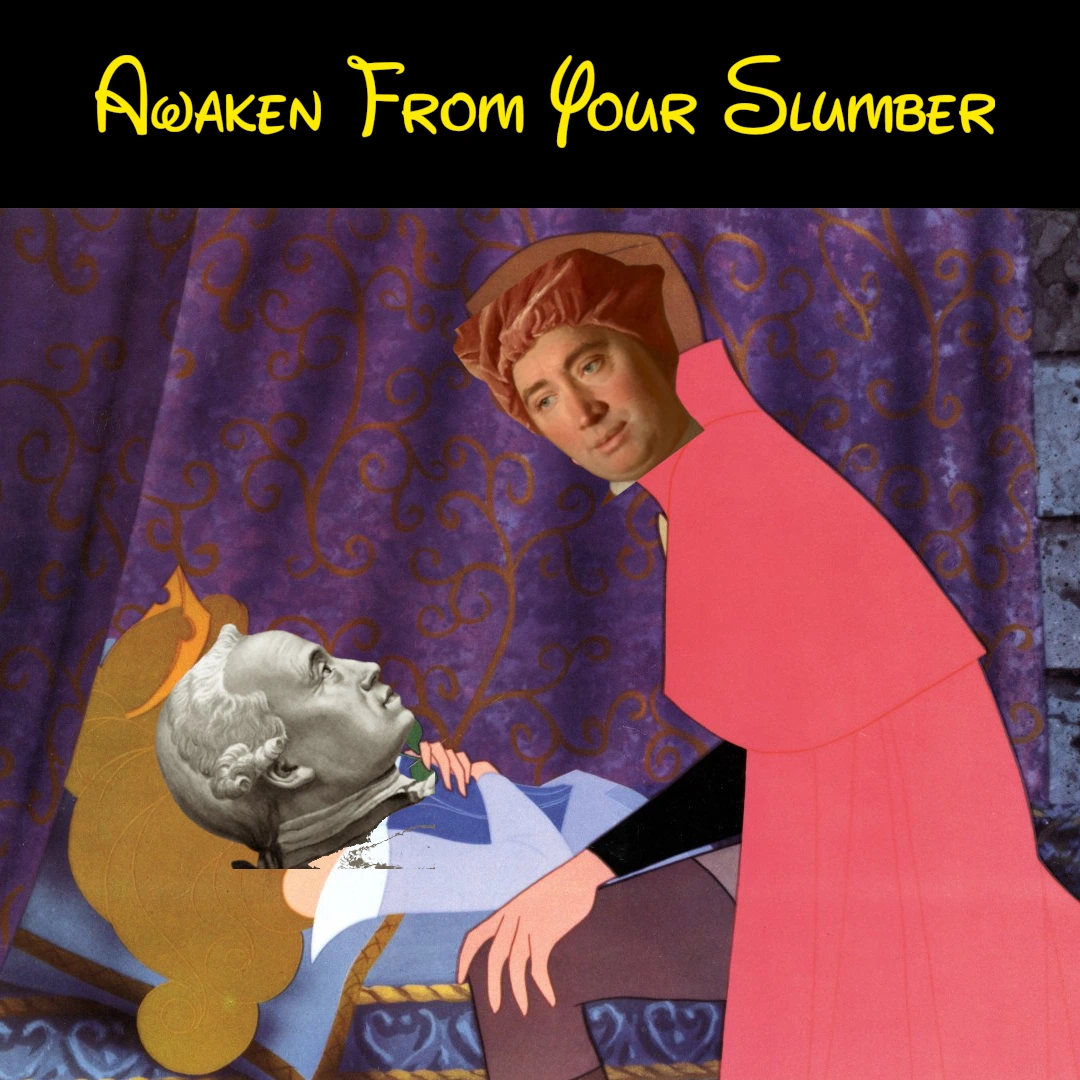
For now this is an essay about Kant's view on the world post awakening from his dogmatic slumber.
It goes over how Kant differs from Hume and any tradeoffs Kant accepts with his solution.
I don't think this is my best essay but If you're really interested or need a refresher on Kant give it a read.
You can lmk of anything I got wrong about Kant through my contact page because I'm sure I got things wrong.
Peter MacAulay
Dr. Dryden
Phil 3911
Nov 06, 2025
Prolegomena Paper: Kant and Hume’s Situationship
While discussing David Hume’s skepticism, Kant says, “He justly maintains that we cannot comprehend by reason the possibility of the existence of another which is necessitated by the former.” (Kant 4:310). This is the argument that causes Kant to be awoken from his dogmatic slumber and sets him on the path towards a Copernican turn of his own. Hume argues that our belief in cause and effect is a symptom of habit, suggesting it doesn’t certainly exist. For Kant, causality must be more than mere belief, without it our experience would collapse into disorder. It would result in a world where nothing could be coherently experienced at all. To avoid such skepticism, Kant seeks a way to ground reliable knowledge; to determine where it comes from, and what is possible to know.
I will explain Hume’s problem, and Kant’s response in the form of his Copernican revolution. Now Kant’s analytic synthetic distinction combined with a priori and a posteriori can fix Hume’s concerns. Kant goes on to distinguish between intuitions and concepts in forming knowledge of the phenomena. With these distinctions we can avoid being misled into thinking we know beyond into the noumena. Once we are freed from skepticism, the contents of the noumena will still be unknowable, but can be useful now that there is a clear distinction between it and the phenomenal.
Hume believes that all knowledge derives from ‘Matter of Fact’ or ‘Relations of Ideas’, which pertains to experience, or ideas which do not refer to experience but to the mind’s concepts. The problem for Hume is that our belief in causality being a priori is a symptom of habit. We cannot determine something’s necessity via experience.
Hume resorts to skepticism about metaphysics because if something can’t be derived from a Matter of Fact or a Relation of Ideas, it is meaningless. He believes this because empirical experience is the only way to cultivate knowledge. Empirical experience is only habit and not universal or necessary, anything metaphysical, which is universal and necessary, must be dispelled as it contains no knowledge. Kant presents Hume’s position, “…that we cannot comprehend by reason the possibility of causality, that is, of reference of the existence of one thing to the existence of another which is necessitated by the former.” (Kant 4:310). Thus, for Hume, we only engage in metaphysical ideas to find a matter of fact or a relation of ideas within them.
Kant agrees that no knowledge can be gained from something that can’t come from experience, but he is not satisfied by the conclusion. He says that while all knowledge comes from experience, it doesn’t arise from experience, “…we must not seek the universal laws of nature in nature by means of experience, but conversely must seek nature, as to its universal conformity to law, in the conditions of the possibility of experience, which lie in our sensibility and in our understanding.” (Kant 4:319). If we seek truth in a universal law, we will not find knowledge, just an endless quest to reach the realm beyond possible experience, which we can never reach. Instead, Kant suggests that nature itself conforms to the structures of our sensibility and understanding. We cannot know what we do not experience, but our experience is already shaped by the mind’s own organizing principles.
Dissatisfaction with Hume’s conclusion is what drove Kant to start on the path to his own Copernican Revolution. Kant would completely change his point of view as Copernicus did when developing his completely different view of the solar system. Kant changed the thought that knowledge conforms to objects, to instead thinking that objects conform to our cognition. When discussing pure concepts’ a priori origin and the validity of that, he says, “… they are not derived from experience, but experience is derived from them.” (Kant 4:313). This is a revolutionary view on the problem. Instead of suggesting that the world shapes us, our world is shaped by us.
When Kant claims that the world is shaped by us, it does not mean that we invent reality. He is instead suggesting that our mind is actively structuring experience according to its own a priori forms. For example, when we say, “the wind causes the leaves to rustle,” we are not deriving causality from observation, we are applying the category of cause to a sequence in time. Without structure, experience would be nothing more than an unconnected stream of sensations floating in a void. Not only would a structure like a society not be able to form, but our basic tasks we complete to survive each day would falter under the disorder of experience. This synthesis between sensibility and understanding is what transforms mere perception into experience. Kant grounds the necessity of scientific laws: they are not discovered in nature by induction but prescribed to nature by the structure of human reason.
Hume’s Matter of Fact’ or ‘Relation of Ideas were not sufficient for Kant’s new world view. While he kept the core of what Hume stated, he also had to expand it. For Kant, relations of ideas would map onto analytic a priori. Something that is analytic a priori is universal and necessary, but it is true or not true by virtue of its meaning. Logic falls under this realm. Logic can be true or false, but it is not inhibited by the world. Logic is not created. No matter where in the universe, it must exist and behave the same.
Hume’s ‘Matters of Fact’ map onto synthetic a posteriori for Kant. Synthetic a posteriori is not necessarily true. Its meaning comes from its relation to the world; it is empirical. An example of this could be, that it is cold in February. Although it is normally cold in February, this is a judgment about the world. The judgment is not universal or necessary. The problem arises for Hume when you have something synthetic and a priori. Synthetic a priori is universal and necessary, therefore always true, and it is an ampliative statement about the world. Synthetic a priori relates to the world yet it is a priori so it comes before experience with the world. Causation is synthetic a priori because it is about the world and Kant claims that because our mind shapes our world, it is universal and necessary. Cause exists in everyone’s life, and it is necessary to doing and understanding anything.
Hume has a problem with this because he believes everything comes from experience, making it impossible to know if something is universally and necessarily true. Cause is one of these concepts that can’t be derived from the world, and therefore Hume believes we cannot use it to gain knowledge. Kant opposes this by saying, “All synthetic principles a priori are nothing more than principles of possible experience.” (Kant 4:313). This allows cause to be a guide to possible experience and allowing us to gain knowledge through causality. The natural world and all that is possible via experience is following the principles of synthetic a priori. It wouldn’t make sense if the principles the world is derived from did not show up in our interactions with it. Synthetic a priori must exist because we encounter these principles all the time in life. This means that Hume’s skepticism is cured, causal relation would fall into synthetic a priori. It is a judgement about the world that is always true. We experience causal relation via pure intuitions and concepts in the phenomenal world. Thus, we need to define intuitions, concepts, and ultimately, how we perceive.
When we are experiencing the phenomenal world, we perceive. Our perception is split into two forms: sensation and cognition. Sensation is subjective perception, while cognition is objective perception. Within cognition, there are intuitions and concepts. Intuitions aren’t choices; they are just what happens to you, they’re receptive. “An intuition is such a representation as would immediately depend upon the presence of the object.” (Kant 4:282). If you have an intuition of a book, its singular, not attached to the concept of all the other books you’ve seen, touched, smelled, heard, or tasted. In short, an intuition of an object in the world that is not attached to a concept, it is just raw data you perceive in the world via your senses. Intuitions have two forms: pure and empirical. Empirical intuitions are based on your senses; like the book example, you can use your senses to perceive it. Whereas pure intuitions regard time and space. Pure intuitions are a priori forms of sensibility. This is because we experience time and space no matter what, but it isn’t directly sensed like our empirical intuitions. “… if we omit from the empirical intuitions of bodies and their alterations (motion) everything empirical, i.e., belonging to sensation, space and time still remain, and are therefore pure intuitions.” (Kant 4:283). Yet despite our senses being the way we interact with the world, we can agree that everyone experiences space and time no matter what. You experience them in the same raw form that you experience things empirically, but it is non-tangible. “… perception of actual objects, and in conformity with which objects can be known a priori but only as they appear to us.” (Kant 4:283).
Also, under the umbrella of cognition, we have concepts. A concept is something that can act like a mark to represent many things. They are spontaneous knowledge, such that a concept can be called upon, returning something consistent and coherent. Just like intuitions, concepts can be empirical or pure in form. Empirical concepts are built from sense (empirical) intuitions. This is like how I can gain the concept of bitterness from continued intuitions in which I taste bitter. Pure concepts are solely about the understanding of the categories. These are concepts that exist a priori, universally and are necessary. Concepts that are about the world, but experience is derived from them. “… it is first necessary to remind the reader that we are discussing, not the origin of experience, but what lies in experience.” (Kant 4:304). This is why the categories, referring to pure concepts are synthetic a priori, they concern the world, but are universally true and necessary for experience. We can understand this when looking at the categories, reality, negation, limitation, substance, causality, community, possibility, existence, and necessity. These are all concepts that can not be universal and necessary for Hume and would therefore be meaningless. Our cognition of the world is what creates it, and these are all concepts that are required for our world to exist. This is why Kant calls his theory transcendental idealism. the world is shaped by the mind's innate structures and that we can only know things as they appear to us, not as they are in themselves.
Anything beyond possible experience cannot create knowledge. Knowledge only comes from the phenomena where we can have intuitions leading to concepts. The noumenal is what is not phenomenal and is therefore unknowable. You cannot have intuitions of the noumena, “… because our pure concepts of the understanding as well as our pure intuitions extend to nothing but objects of possible experience, consequently to mere things of sense; and as soon as we leave this sphere, these concepts retain no meaning whatever” (Kant 4:315). A limit to meaning beyond possible experience keeps us from dogmatism. It allows us to have a groundwork to talk about metaphysics, while not allowing us to get trapped in false logic and illusions, making assumptions about the unknowable.
For Kant, not being able to know the noumena is not a failure but instead it is a necessary safeguard. If reason tries to go beyond possible experience, when trying to speculate about God, freedom, or the soul, it produces only illusions. While we may think these noumenal concepts, we cannot know them, for we have only interacted indirectly through our experience of the phenomenal. “The imagination may perhaps be forgiven for occasional vagaries and for not keeping carefully within the limits of experience, since it gains life and vigor by such flights and since it is always easier to moderate its boldness than to stimulate its languor.” (Kant 4:317). Ideas of pure reason are important, but they serve as a medium to our understanding of the world rather than constituting knowledge of what we cannot know. The noumenal, though unknowable, gives us the boundary of sense. Allowing us to know where all legitimate knowledge must remain. Thus, metaphysics becomes a means to guide us. Not unlike, “… a pilot who by means of safe navigational principles drawn from a knowledge of the globe and provided with a complete chart and compass, may steer the ship safely whither he listeth” (Kant 4:262). The pilot cannot know every part of the sea, but their ability to be well trained in the parts that they do know is what allows them to avoid a trip into uncharted waters. Uncertainty in travels may lead to docking on the nearest land they come across, or worse becoming stranded at sea, lost, or wrecked.
Returning to Hume’s original skepticism and contrasting it to Kant’s groundwork for the natural world, giving us a clear definition of metaphysics; we should ask, is it worth it? Is Kant’s structured natural world better than skepticism? I would say absolutely. Hume is alone on skeptic island, cast away from society, never being able to know anything for certain. Kant on the other hand, can accept the unknown, and recognize that it shapes our world. He also shows that cause must exist, and it is the very thing that allows us to flourish in life. “Not only are our concepts of substance, of power, of action, of reality, and others, quite independent of experience, containing nothing of sense appearance, and so apparently applicable to things in themselves (noumena), but what strengthens this conjecture, they contain necessity of determination in themselves, which experience never attains” (Kant 4:315). I think Hume would agree that these topics are independent of experience. While they may have no meaning for him since they are outside of experience, I think that even he would want an agreed upon groundwork to talk about these subjects. When you take away these subjects and treat them skeptically, you lose so much ability.
Despite providing a better option than skepticism, Kant is still engaging in a trade-off. By firmly saying that we cannot know beyond possible experience, and instead we are only able to think and believe in it, we give up on being able to ever know them for certain. This shows a lack of concern for being able to discover the noumena as we do the phenomenal. This is because for Kant, it is not a limitation, but instead a way to avoid the ever-alluring dogmatism, while giving us the ability to know and believe in something to avoid skepticism. If you were to be on a seesaw on which dogmatism was on one side, and skepticism was on the other, Kant has given us a way to not fall to either side when one seems to have more weight. The belief in the noumena is like a way of meditating so that the pull of either side is not enticing; you remain perfectly balanced. In this balance, Kant shows that genuine philosophy lies not in escaping limitation, but in understanding it. The boundaries of reason become its strength rather than its weakness.
In conclusion, Hume had valid reason to be skeptical, due to not having the definitions of the phenomenal world and the noumena that Kant developed. His concern that causation along with other metaphysical concepts could never be more than mere habit of empirical experience threatened to unravel not only the noumenal world but also the phenomenal world. The skepticism that Hume settled on is far from ideal. It means that so much of what we still do not know, and want to know, is categorized as meaningless. Kant defines synthetic and analytic a priori and a posteriori with his definitions of intuitions and concepts. This gives us space to talk about metaphysics where it can have meaning without assuming knowledge about the unknowable. This solution leaves us unable to know anything beyond possible experience, but regardless of whether we can know anything, it now has a space to exist. Kant’s transcendental idealism allows meaning where Hume found only skepticism. It gives us grounds for experience while stopping a collapse into dogmatism. By giving us these grounds, Kant has shown that the limits of knowledge are not its failures and instead its very conditions.
Works Cited
- Kant, Immanuel. Prolegomena to Any Future Metaphysics. Translated by James W. Ellington,
- Hackett Publishing Company, 2001.